Tuscany Holidays, Information for holidays in Tuscany


Tuscany Villa Rental


Tuscany Holidays

Deu  ::Eng  Esp  Fra  Holl  Ita  


Information for holidays in Tuscany


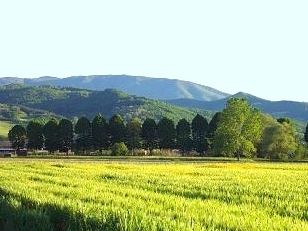
The Tuscan region is mostly hilly and mountainous.

Tuscany - Mugello Valley
The major range running northsouth on the east, the Tusco-Emiliano Apennines, vaunts peaks of respectable heights (e.g., Mt. Prato at 2053 m, Mt.Corno alle Scale at 1945m, andMt. Falterona at 1654 m); the Apuane on the west are almost as high. As you go south, the mountains gradually turn into hills (named after the Chianti Metallifere, and Amiata regions) collectively known as the Antiappennini (pre-Apennines). Valleys of considerable size (Lunigiana, Garfagnana Mugello and Casentino) are sandwiched between the Apennines. The rare plains are either of the coastal type (e.g., Versilia and Maremma) or alluvional (e.g., the Amo Valley). The coastline alternates long stretches of beach (Versilia, Cecina) with promontories and cliffs (Piombi no, Argentario). The islands of the Tuscan archipelago may be considered a continuation of the geological configuration of the coast. The major Tuscan rivers are the Arno, Ombrone, Serchio, and Sieve, while no lakes worthy of mention exist. In terms of vegetation, there are great chestnut forests in the mountain regions, Mediterranean pines and brush along the coast, with neat olive groves and vineyards covering the hillsides. Subterranean Tuscany also yields rich fruits: mercury (Amiata), copper and alabaster (Colline Metallifere), marble (Apuane, especially Carrara), and iron (Elba and Grosseto). The Larderello geysers near Volterra generate some of the region`s electricity. Typical features of Tuscany`s winter climate are heavy rainfall and frequent temperature plunges, mainly due to icy north-winds. Summer hot spells are periodically mitigated by sudden rain storms.

Tuscany - Tuscany is divided into ten provinces. The province of Florence is certainly the most visited, thanks not only to its monuments but also to its wonderful countryside (see the Mugello valley and Florentine Chianti). With the Val d’Orcia, the Crete senesi Sienese Chianti and its many historical towns, such as Montalcino, San Gimignano, Pienza, Monteriggioni and others, the province of Siena is a fascinating area of Tuscany In eastern Tuscany there is the province of Arezzo which is renowned for its goldsmiths, for the historical towns of Cortona, Anghiari and Sansepolcro and for the gorgeous Casentino valley. In northern Tuscany Prato is the most recent province. With its textile companies, this small part of ... Tuscany
Villas in Tuscany - The Tuscan countryside is scattered with historical villas, real monuments the most important Tuscan families commissioned in the past as holiday residences, where to relax far from the chaotic city life. The Medici family inaugurated the tradition with the villa in Poggio a Caiano, the first of 18 country residences all over Tuscany The villas had a double function: not only were they places where the members of the family could relax, they were also places where to receive the most prestigious guests. The buildings were therefore decorated with important works of art and had big parks in which fountains, plays of water and statues aimed at impressing the guests and celebrating the owners` power. Many of these villas are now open to the public and represent a unique occasion ... Villas in Tuscany
Florence - Boasting Etruscan origins and having then developed as a Roman colony with the name Florentia, today Florence is a charming city attracting every year thousands of tourists, fascinated by the Cathedral, the Baptistery, the church of San Marco, San Miniato al Monte, Ponte Vecchio, Piazza della Signoria and Palazzo Vecchio, the Loggia dei Lanzi and its statues and many other famous monuments. The many Medicean villas scattered in the countryside surrounding Florence and Fiesole, with its Roman amphitheatre and the magnificent view of the Tuscan main city, are two fundamental stops while visiting Florence To those who love historical commemorations and folklore, Florence offers various events in the course of the year: the Cavalcata dei Magi (evoking the trip the Three Wise Men ... Florence
Siena - Ancient rival of Florence Siena with its numerous monuments - Piazza del Campo with the Palazzo Pubblico and the Torre del Mangia, the Cathedral, the churches of Santa Maria di Provenzano and of San Francesco and the Museo Civico, housing masterpieces by the Masters of the 14th century Sienese School - and with its "Palio", attracts every year thousands of tourists from all over the world. The gorgeous Sienese countryside is scattered with Medieval hamlets and towns, particularly interesting from a historical, cultural and landscape point of view, such as Monteriggioni, San Gimignano, Montepulciano, Pienza and Montalcino, just to mention the most famous ones. Siena boasts also a great wine-growing and culinary tradition, whose specialities are the "pici" (a kind of fresh pasta) ... Siena
Arezzo - Situated at the intersection of the Valdarno, the Valdichiana and the Casentino Arezzo is a town in south-eastern Tuscan that has maintained its Medieval structure. The Basilica di San Francesco is the most important monument of this city so rich in places to interest, such as the Cathedral and the Pieve di Santa Maria. The church houses the "Legend of the True Cross", the famous cycle of frescoes by Piero della Francesca. Spending your holidays in Arezzo offers you the occasion for visiting the many historical towns scattered in the surrounding countryside - Cortona, Poppi, Sansepolcro, Bibbiena and Anghiari - and for plunging in the suggestive atmosphere of the Eremo di Camaldoli (Camaldoli hermitage). To those who love folkloric events, Arezzo offers the "Giostra del Saracino" (Saracen Joust). Arezzo hosts an important antiques fair and the "Mostra internazionale dell`oreficeria e della bigiotteria" ... Arezzo
Lucca - City of a thousand faces and of an intriguing and discreet charm which is there to be discovered and increasingly appreciated as one gets to know the city better. Lucca with its superb 16 C City Walls which protectingly encircle it, a charming place to stroll among the trees and grassy banks, Lucca with its tranquil river which looks on a short distance away offering jn`orgettable walks where one can restore Docly ana mind, Lucca city of great artists, of immortal composers such as Boccherini, Catalani and Puccini. Lucca with its is shop windows which testify the flourishing continuity of mercantile business dating from past centuries and never forgotten; with the streets of its town centre where the traditions are renewed every day offering ... Lucca
Pisa - Pisa, one of the four ancient maritime republics, was once one of the most important Tuscan cities and a sworn enemy of Florence Livorno and Lucca Today, Pisa is one of the world`s most renowned and visited cities of art, thanks to the Leaning Tower, to the whole Piazza dei Miracoli - one of UNESCO`s World Heritage sites - and many other little jewels of Italian art, such as the churches of Santa Caterina, Santa Maria della Spina and San Paolo a Ripa d`Arno. The Etruscan findings in Volterra and Pisa`s folkloric events, such the "Palio delle Repubbliche Marinare" (Regatta of the maritime republics) and the "Gioco del ponte" (Battle of the bridge), testify the city and province`s past. Those who love nature can seize the opportunity and visit the "Parco di Migliarino, San Rossore e Massaciuccoli" (Natural park of Migliarino, San Rossore and Massaciuccoli). Crossed by the Arno, Tuscany`s most ... Pisa
Pistoia - Pistoia was once an important Lombard town and a lively and flourishing autonomous centre before definitively surrendering to Florence in 1530 (the year in which the town became part of the Grand Duchy of Tuscany). Although it is not a mass tourism destination, Pistoia is rich in interesting monuments, such as the Cathedral, the Baptistery, the Palazzo del Comune and the church of the Madonna dell`Umiltà. Much more famous are the tourist centres scattered in the province: the Abetone ski resort, where Tuscan skiers spend their winter weekends, and the thermal resorts of Montecatini Terme and Monsummano Terme. Every year, in the summer, Pistoia organizes and important blues festival, which attracts hundreds of fans in the town. Pistoia is a small town in northern ... Pistoia
Grosseto - Grosseto is Tuscany`s most southernly province and is considered to be the capital of Tuscan Maremma The ancient city walls built in 1574 under Grand Duke Francesco I de` Medici still surround its historical centre. Situated in a former marshland that was once infested with malaria, at present the province of Grosseto is a real paradise for those who love culture, nature and good cuisine. Grosseto countryside is scattered with ancient Etruscan towns, such as Roselle, Populonia and Vetulonia. Those who love nature can visit the Parco Naturale della Maremma (Maremma Natural Park), the Riserva Naturale Diaccia Botrona (Diaccia Botrona Nature Reserve) and the Parco Nazionale dell`Arcipelago Toscano (Tuscan Archipelago National Park) and spot some dolphins and whales in the Santuario dei Cetacei (Cetacea Sanctuary). Grosseto is the most ... Grosseto
Livorno - After various vicissitudes, Florence purchased the territory where is situated Livorno in 1421. Despite having been destroyed during World War II, the town has maintained the structure of the Medicean "ideal town". Mostly renowned for the Terrazza Mascagni, the belvedere on the sea dedicated to the famous composer, Livorno presents several interesting areas, such as Piazza Grande, Piazza della Repubblica with the Fortezza Nuova and the characteristic district of "Venezia Nuova". Today Tuscany`s most important harbour, Livorno is the town who gave birth to important representatives of Italy`s history, culture and art, such as Amedeo Modigliani, Giovanni Fattori and the above mentioned Pietro Mascagni. Those who love fish can seize the opportunity and taste Livorno`s most famous dish: the "cacciucco". Livorno is situated in a wide plain ... Livorno
Prato - Prato was born in the 11th century from the union of the two villages of Borgo al Cornio and Castrum Prati. In the course of time, Prato was dominated by Pistoia and Florence before being elevated to city status in 1653. Today, as in the past, Prato is an important industrial district in northern Tuscany renowned all over the world thanks to its textile industry. Although Prato cannot boast as rich an artistic heritage as neighbouring Florence it nevertheless has interesting monuments, such as the Cathedral, the church of Santa Maria delle Carceri and the gothic church of San Domenico. The Medicean villa in Poggio a Caiano is just a few kilometres away from Prato The villa was one of the numerous residences the Medici family had in the countryside around Florence Prato is situated in north-eastern Tuscany in a plain covering ... Prato
Massa-Carrara - Massa-Carrara is the most northernly of all Tuscan provinces; it borders Emilia-Romagna and Liguria. Situated between the Apuan Alps and the Tyrrhenian Sea, the province is scattered with churches, "pievi" (parish churches), castles and less renowned but nevertheless interesting historic hamlets, such as Bedizzano, Colonnata (where the famous lard is produced), Bibola and Ponticello and the castle of Fosdinovo. Mostly renowned for the marble produced in the quarries in the Apuan Alps, which Michelangelo chose personally travelling to Massa-Carrara this province is the ideal holiday destination for any kind of tourists: those who love the sea can bask in the sunshine on the beaches in Marina di Massa, Marina di Carrara and Cinquale, whereas those who like trekking can seize the occasion and discover ... Massa-Carrara
Chianti - The Chianti region is a vast hilly area situated in the provinces of Florence and Siena embraced by the Chianti mountains and the Pesa and Elsa valleys. The Chianti region is divided into the municipalities of San Casciano Val di Pesa, Tavarnelle Val di Pesa, Barberino Val d`Elsa and Greve in Chianti (in the province of Florence) and Castellina in Chianti Radda in Chianti Gaiole in Chianti and Castelnuovo Berardenga (in the province of Siena). The Chianti region includes a small part of the municipality of Poggibonsi, as well ... Chianti
Versilia - With its golden beaches and its pinewoods, every year Versilia attracts thousands of tourists who want to relax lying in the sun and strolling along the sandy coastline. Actually, Versilia is much more than this: Pietrasanta Forte dei Marmi Seravezza Stazzema Camaiore and Viareggio house many less renowned but nevertheless precious treasures of Tuscan art. Moreover, many cultural events take place in Versilia especially in the summer: from the rich programme of the theatre "La Versiliana" to "Puccini Festival" and the numerous concerts organised in the Cittadella del Carnevale and in the interior. Not to forget the most important event: the Carnival of Viareggio which attracts every year thousands of tourists thanks to its colourful floats. Versilia is the name of a long coastal region in northern ... Versilia
Maremma - The Maremma spreads in southern Tuscany It is a still wild region where ancient traditions survive in pure nature. To sea lovers, the Maremma offers kilometres of sandy beaches, small bights and crystalline sea where to scuba dive at the discovery of the animals and plants living in this corner of paradise. The Maremma is not only synonym with beach and sea: the Maremma is also art, history and culture, with the Etruscan cities of Populonia, Vetulonia and Roselle and its numerous hamlets and castles; the Maremma is also health and well-being, with the spas in Saturnia; and to mountain lovers, the Maremma offers the possibility of hiking on the mount Amiata Maremma is the name of a wide coastal region stretching in southern Tuscany and northern Lazio ... Maremma
Casentino - Situated between the Alpe di Catenaia, the Pratomagno and the plain of Arezzo the Casentino valley is a natural oasis in south-eastern Tuscany In the luxuriant Casentino forests, on the mount Falterona, there are the springs of the Arno, the most important Tuscan river. This vast mountain area is the ideal destination for those who want to relax hiking or mountain biking in pure nature. The Casentino valley is also an oasis of history and spirituality: the region is scattered with castles and Medieval hamlets and towns - such the castles of Poppi and Romena -, "pievi" (parish churces) - such as the Pieve di Santa Maria Assunta in Stia and the Pieve di San Martino a Vado, in Strada in Casentino - and sanctuaries - the most famous one being that of La Verna, where Saint Francis of Assisi received the stigmata. Casentino is one of the four valleys stretching in the province of Arezzo It is situated in central-eastern Tuscany on the border with Emilia-Romagna. On the north, the mount Falterona, where the Arno river springs ... Casentino
Garfagnana - Garfagnana stretches in northern Tuscany between the Apuan Alps, the Apennines and Lunigiana First inhabited by the ancient tribes of Apuan Ligures and then colonized by the Roman, Garfagnana presents many different landscapes: from inaccessible mountains to the gentle hills in the south of the region. Apart from its most renowned towns, such as Castelnuovo Garfagnana and Bagni di Lucca Garfagnana is scattered with small historical hamlets, such as Isola Santa, Orzagli, Cascio and Silico, which despite being often passed by on traditional tours, are really worth a visit. The home of witches, elfs and hobgoblins, Garfagnana is the region of the famous "ghost town" of Fabbriche di Careggine, hidden under the waters of the artificial lake of Vagli. Garfagnana is a wide area stretching in northern Tuscany in the province of Lucca Situated between the Apuan Alps and the Tuscan-Emilian Apennines, Garfagnana borders on Lunigiana The Serchio river flows across this valley covered with forests. Garfagnana is divided ... Garfagnana
Val d`Orcia - Val d`Orcia is a valley stretching south of Siena along the Orcia river - hence the name. With its gorgeous landscape made of gentle hills covered with olive groves, vineyards and forests, Val d`Orcia is the ideal destination for those who want to relax hiking in the "Parco Naturale, Artistico e Culturale della Val d`Orcia" (Natural, Artistic and Cultural Park of Val d`Orcia), which UNESCO declared World Human Heritage in 2004. Val d`Orcia is also synonym with art and culture: the area is scattered with many Medieval hamlets and towns rich in history and interesting monuments, such as Pienza and Montalcino, just to mention the most famous ones. Those who prefer healthy holidays can visit the spas in Bagno Vignoni and Bagni San Filippo... Val d`Orcia
Val di Cecina - Val di Cecina is the name of an area stretching in the southern part of the province of Pisa along the Cecina river (hence the name). In Val di Cecina almost inaccessible peaks alternate with steep gullies - the so-called Balze di Volterra - and gentle hills sloping towards the plain near the mouth of the Cecina river. In this region where forests alternate with wide meadows rises Volterra, the most important town in Val di Cecina thanks to its Etruscan finds, its Roman remains, its Medieval buildings and its craftsmen working alabaster. Val di Cecina is scattered with small historical towns and hamlets, such as Bibbona, Montecatini in Val di Cecina and Guardistallo. Val di Cecina is the name of the region stretching in the southern part of the province of Pisa and in a small part of the province of ... Val di Cecina
Mugello - Situated north of Florence the region of Mugello stretches in the upper Sieve valley. The region presents an extremely variegated landscape, in which high mountains covered with forests transform into gentle hills sloping then towards the plain along the Sieve river. Not only does Mugello present a particularly suggestive landscape; the region is also rich in ancient "pievi" (parish churches), scattered in the whole valley - Vicchio, Palazzuolo sul Senio, Barberino di Mugello Scarperia, Marradi and Firenzuola -, and Medicean villas, such as Villa Demidoff in Pratolino, the Fortezza di San Martino, the Castello del Trebbio and the villa in Cafaggiolo. During the summer the lake of Bilancino transforms into an appreciated lakeside resort ... Mugello
Valtiberina - Valtiberina is the name of the valley in which the Tiber river flows, from its spring on the Mount Fumaiolo, in Emilia-Romagna, to its mouth, in Lazio. This Tuscan-Umbrian valley stretches in parallel with Casentino between the Alpe di Catenaia and the Alpe della Luna. Thanks to its numerous charming Medieval hamlets and towns, so rich in history, and to its natural beauties, Valtiberina is the ideal destination for those who like to spend their holidays discovering less-renowned but nevertheless fascinating towns, such as Sansepolcro, Monterchi, Anghiari and Caprese Michelangelo and many other places housing some of the masterpieces by two great Italian artists: Piero della Francesca and Michelangelo. Those who like "green holidays" in harmony with nature can hike or mountain bike ... Valtiberina
Amiata - The Mount Amiata is the most important relief in southern Tuscany Surrounded by the valley of the lake of Bolsena, Val d`Orcia and Maremma the Mount Amiata is an ancient, inactive volcano covered with beech and fir woods and chestnut groves. In the summer the Mount Amiata is the ideal destination for those who like hiking and mountain biking, whereas in the winter the area transforms into a wide ski resort. The municipalities of the area - Abbadia San Salvatore, Arcidosso, Piancastagnaio, Santa Fiora and Seggiano - are rich in historical evidence of its past. The Etrurian were the first to settle in the region; the Carolingian and the Aldobrandeschi family followed; in the 14th century, Siena conquered the area, which then became part of the Grand Duchy of Tuscany The mount is part of the "Parco Faunistico del Monte Amiata" ... Amiata
Valdichiana - Valdichiana is the name of a Tuscan region rich in marvellous landscapes, Medieval towns and "pievi" (parish churches) and natural reserves, stretching in the provinces of Siena and Arezzo Valdichiana is renowned particularly for the famous Chianina meat; actually, Valdichiana is a charming region with an important past: Cortona, Cetona, Castiglion Fiorentino, Sarteano and the other towns of the valley are magnificent evidence thereof. Those who like healthy holidays can spend some time in the spas in Chianciano Terme and San Casciano dei Bagni, whereas those who love nature can visit the natural reserve of the lake of Chiusi. After having toured the whole day at the discovery of Valdichiana`s natural and artistic beauties, a dinner with specialities of the area ... Valdichiana
Valdelsa - Valdelsa is a region stretching north of Siena between Sienese Chianti and Val di Cecina The Via Francigena, the ancient pilgrimage road connecting northern Europe with Rome, crosses Valdelsa so that in the past this region played a strategic role in the Tuscan road system. The Medieval towns of Colle Val d`Elsa, Monteriggioni and San Gimignano - which was included in the list of UNESCO`s World Heritage sites in 1990 - are rich in historical evidence of the region`s glorious past. Like many other Tuscan areas, Valdelsa boasts an important culinary tradition, whose specialities - "pici" (a special type of fresh pasta), mushrooms, tripe and many other succulent dishes ... Valdelsa
Valdisieve - The Valdisieve is a narrow valley stretching east of Florence between Mugello and Valdarno Superiore (Upper Valdarno). The valley is rich in rivers and torrents, the most important of them being the Sieve. Its charming hills are covered with fir, oak and beech woods. The Valdisieve is an agricultural area: the hills around Pontassieve, Rufina, Pelago and Londa are covered with olive groves and vineyards for the production of Pomino and Chianti Rufina wines. The Valdisieve is a narrow valley in north-eastern Tuscany whose name comes from the Sieve river, one of the many tributaries of the Arno river, running in the main Tuscan river near Pontassieve. The Valdisieve begins after Vicchio del Mugello where the Sieve river (which springs in Mugello) ... Valdisieve
Valdinievole - Valdinievole is a valley in northern Tuscany at the foot of Pistoia Apennines. Its name means "the valley of the Nievole river". In the past, the region was a marshland and was therefore called "valle della nebbia" (valley of fog) or "valle delle nuvole" (valley of clouds), due to the assonance - in Italian - of these two names with the word Nievole. In Valdinievole hills covered with chestnut and olive groves, culminating with the Montalbano, slope towards the wide plain of the Padule di Fucecchio, a natural reserve. Thanks to the spas in Montecatini Terme and Monsummano Terme, Valdinievole is the ideal destination for those who dream of pleasant relaxing and healthy holidays. Valdinievole features also the park that the town of Collodi has dedicated to Pinocchio, the famous puppet that ... Valdinievole
Empoli Countryside - Empoli plain, a vast agricultural area where the Arno river flows towards the Tyrrhenian Sea, stretches in the heart of Tuscany surrounded by Valdinievole and the hills of Chianti and Valdelsa Empoli is certainly the most important town of this vast Tuscan region that includes the municipalities of Vinci - the birthplace of a genius, Leonardo da Vinci -, Montelupo Fiorentino - the town of ceramics - and Certaldo - Giovanni Boccaccio`s birthplace. Empoli plain is a vast region in central Tuscany From a geographical point of view, Empoli plain corresponds to lower Valdelsa the valley of the Elsa river, which runs in the Arno river right between Empoli and San Miniato. The plain is divided ... Empoli Countryside
Crete senesi - Crete senesi is the name of a region in southern Tuscany at the border between the provinces of Siena and Arezzo The Crete present a bare, almost lunar landscape. The Crete are, in fact, a series of argillaceous hills that atmospheric agents have modelled throughout the centuries. Badlands and biancana forms characterise the landscape in this part of Tuscany In this bare and therefore charming region stand the Medieval towns of Asciano and Buonconvento and the abbey of Monte Oliveto Maggiore. Those who like history can grab the chance of a holiday in the Crete senesi and visit the fields where on September 2, 1260 Florentine Guelphs and Sienese Ghibellines fought the famous battle of Montaperti. Rapolano Terme is the ideal destination for those who dream of healthy holidays. Crete senesi is the name of ... Crete senesi
Lower Valdarno - Lower Valdarno is the name of a vast region stretching between Florence and Pisa until the mouth of the Arno river. This populous area presents a typically Tuscan landscape made of gentle hills covered with olive groves and is scattered with numerous interesting Medieval towns housing several examples of Tuscan Romanesque art, such as Calci, Vicopisano and San Miniato. On July 28th, 1364 the town of Cascina was the theatre of a bloody battle between the Pisan and Florentine armies. Michelangelo immortalized it in a fresco in the "Salone dei Cinquecento", Palazzo Vecchio (Florence), which was lost during the enlargement of the hall by Giorgio Vasari. A stay in the relaxing Lower Valdarno should include a visit to Pisa the wonderful town of ... Lower Valdarno
Upper Valdarno - Upper Valdarno is the name of a wide region of Tuscany stretching in the provinces of Florence and Arezzo along the flow of the Arno, the most important river in Tuscany and in central Italy. In this area bounded by the Pratomagno and the Chianti mountains alternate various landscapes: the mountains covered with beeches, chestnuts and oaks slope towards a series of hills covered with olive groves and vineyards and then towards the plain where the Arno River flows. Once a very important region from a strategic point of view, due to the presence of fundamental roads, today the Upper Valdarno is an industrial district and an area rich in interesting "pievi" (parish churches), castles and towns of Medieval origin. Those who love nature ... Upper Valdarno
Lunigiana - Lunigiana stretches at the Ligurian-Tuscan border. The name of the area derives from the ancient Roman colony of Luni. Lunigiana is scattered with ancient hamlets and towns situated along the via Francigena, the ancient pilgrimage route connecting Northern Europe with Rome - such as Villafranca, Terrarossa and Aulla -, castles - such as those of Podenzana, Fosdinovo and those the Malaspina family built in Massa and Carrara - and Romanesque "pievi" (parish churches). Lunigiana is also synonym with nature, with the Parco Naturale dell`Appennino Tosco-Emiliano (Natural Park of Tuscan-Emilian Apennines), the Parco Regionale delle Alpi Apuane (Regional Park of the Apuan Alps) - featuring the wonderful marble quarries renowned all over the world and the caves in Equi Terme ... Lunigiana


© 2007 Holiday Homes Tuscany srl @ Tuscany Villas Rental @ - Via San Piero - Rignano sull'Arno - Florence (ITALY) - P.IVA 05612680487