


History of Lucca
History of Lucca
Lucca was first a Ligurian and then an Etruscan village and in 180 B.C. it became a Roman colony. Following the fall of the Roman empire, the Goths conquered Lucca and during the 6th century the town became the capital of the Lombard Duchy of Tuscia. When Duchy disappeared, Lucca became the capital of the Margraviate of Tuscany.
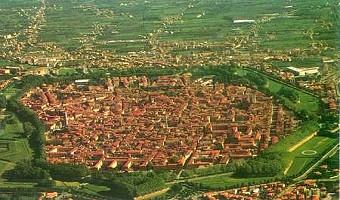
Lucca
In the same period, thanks to the Via Francigena, Lucca became an important stopover in the pilgrimage that lead the Christian coming from north-western Europe to Rome.
After being involved in the war between Florence and Pisa and in the struggle between Guelphs and Gibellines, and after having been governed for some time by Uguccione della Faggiuola, Castruccio Castruccio Castracani and the Guinigi family, in 1430 Lucca constituted itself a republic and maintained its independence until 1799.
In 1805 Napoleon, upon request of Lucca senate, created the Principality of Lucca and Piombino, which he assigned to his sister Elisa and her husband Felice Baciocchi.
Following the Congress of Vienna and the Restoration, the Duchy of Lucca was created and assigned to the Bourbon-Parma. In 1824 Charles Louis succeeded to his mother Maria Louisa and governed Lucca until 1847, when it became part of the Grand Duchy of Tuscany.
In 1860 the Kingdom of Italy annexed Lucca and the Gran Duchy of Tuscany.
Our most requested holiday homes:
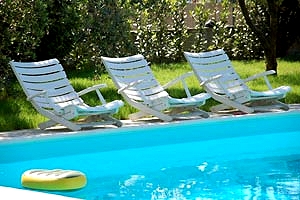 Villa with swimming pool near Lucca, a few kilometres from the beaches of Versilia. 12/13 sleeping accommodations, garden, hydromassage. Tennis courts and riding stable in the vicinity.
More details
Villa with swimming pool near Lucca, a few kilometres from the beaches of Versilia. 12/13 sleeping accommodations, garden, hydromassage. Tennis courts and riding stable in the vicinity.
More details
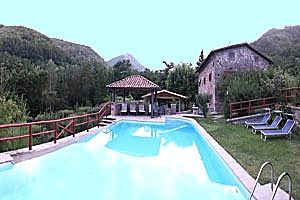 Holiday Tuscany villa with swimming pool in Castelnuovo in Garfagnana, near Lucca. 8 sleeping accommodations, satellite TV, barbecue, Internet connection.
More details
Holiday Tuscany villa with swimming pool in Castelnuovo in Garfagnana, near Lucca. 8 sleeping accommodations, satellite TV, barbecue, Internet connection.
More details
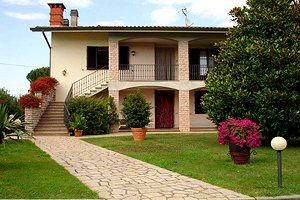 Villa with swimming pool in Montecarlo, in the plain of Lucca. 6 sleeping accommodations, garden, children playground, Internet connection, barbecue.
More details
Villa with swimming pool in Montecarlo, in the plain of Lucca. 6 sleeping accommodations, garden, children playground, Internet connection, barbecue.
More details
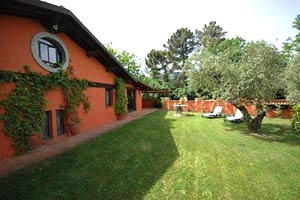 Nice independent villa near the beaches of Forte dei Marmi and Viareggio, in Versilia. Sleeps 10, wide park, swimming pool, Internet connection. Massages and beauty treatments upon request.
More details
Nice independent villa near the beaches of Forte dei Marmi and Viareggio, in Versilia. Sleeps 10, wide park, swimming pool, Internet connection. Massages and beauty treatments upon request.
More details